Surface Sites

Portsdown Main

 Created 17-10-2004   Last update 05-06-2006

click the arrow


page 1 of 2

>


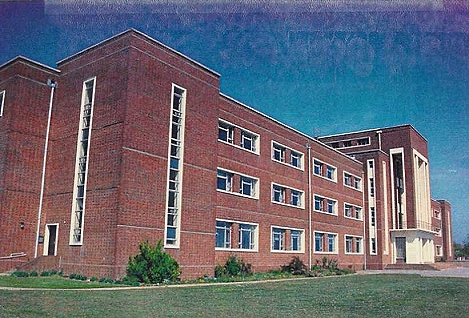
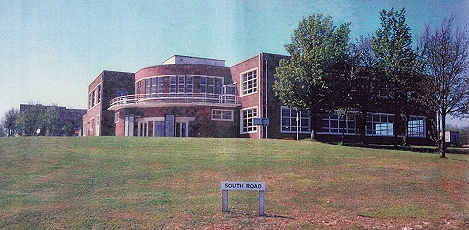
Portsdown Main is an impressive 'art deco' style building which dominates the north Portsmouth skyline and is familiar to any Portsmouth resident who would probably identify it as ASWE. Until now its history has been poorly documented due to the nature of the work which went on there. 

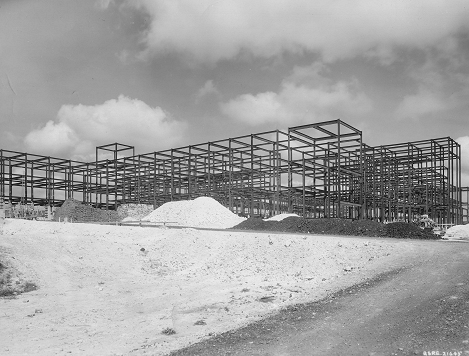
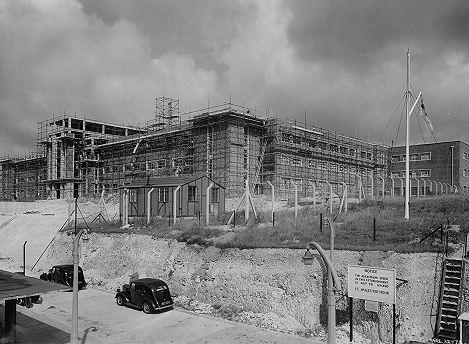
It was designed in the 1930s (hence its style) as a building which would be located somewhere in the UK. The Second World War prevented further progress and it was eventually built on Portsdown in 1952 as an Admiralty Signals Establishment (ASE). It has been subjected to many changes during its lifetime either wholesale or with various departments coming and going. The primary changes can be summarised as:

1952 - Admiralty Signals Establishment (ASE)
Admiralty Surface Weapons Establishment (ASWE)
Defence Evaluation and Research Agency (DERA)
Defence Research Agency (DRA) - 1997

There are a total of 32 buildings on the 46 acre site built between 1946 and 1955 with Portsdown Main being the most outstanding. To the west is Fort Southwick a former Royal Navy COMMCEN. To the east are two further distinct sites on Portsdown Technology Park: an operational Ministry of Defence (MoD) establishment consisting of the Maritime Warfare Centre (MWC) and the Land-Based Test Site (LBTS); and QinetiQ Britain's largest independent science and technology company.

Portsdown Main finally closed its gates on 1 January 1997 and although there have been a number of Government departments interested in the site none have any plans to move there. On 3 October 2002 it was announced that the Defence Science and Technology Laboratory (DSTL) - formed by splitting DERA into DSTL and QinetiQ on 2 July 2001 - was going to move back, but this was cancelled in April 2004. It is now for sale on the open market by King Sturge the international property consultants. 


 Did you ever work at Portsdown Main?

Have you a story you would like to see published here? (bottom of page 2)

Then please email me


All the above information is in the Public Domain


Contributors: Mike Dobson, Andrew Taylor


Grid Ref SU631068

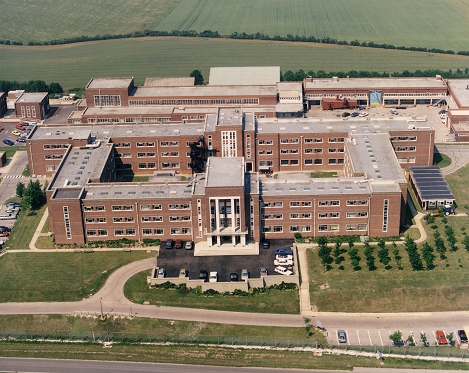
Google Earth Aerial View


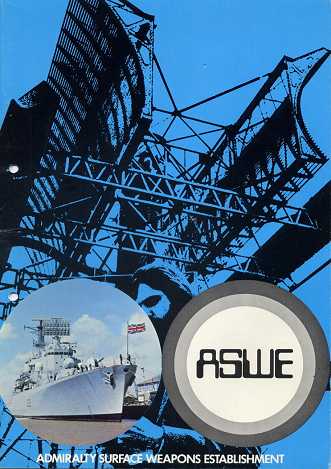
aswe illustration

NEW - 05-06-2006

The front cover illustration from an ASWE recruitment information pack of the early 1970s. The ship is HMS Bristol (D23) the only Type 82 Destroyer to be built. The featured radar is either a Type 901 fire control radar or the Type 965 air search radar.

Source: Andrew Taylor

Photo Interpretation: Dave Spencer


Portsdown Main Map

 Map 1

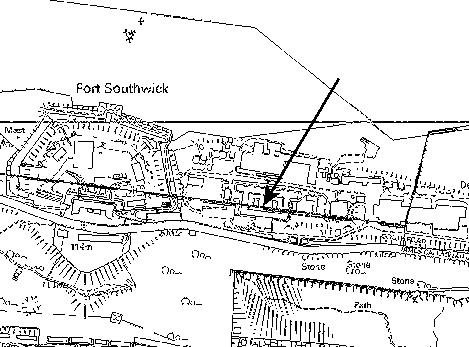
This shows the position of Portsdown Main (arrowed) in relation to Fort Southwick to the west and Paulsgrove Chalkpit to the south. The road running along Portsdown at this point, formerly called Military Road, was adopted by Portsmouth City Council in February 1997 and renamed James Callaghan Drive in honour of the former prime minister who was born in the city.


Portsdown Main map

 Map 2

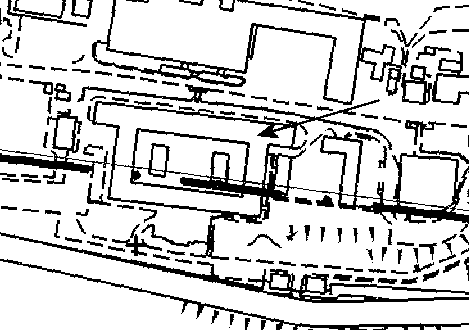
Portsdown Main is arrowed and it can be seen that the building is rectangular with a central quadrangle or light well. The boundary line of Hampshire County Council to the north and Portsmouth City Council to the south runs right through it making planning applications a nightmare. 

 
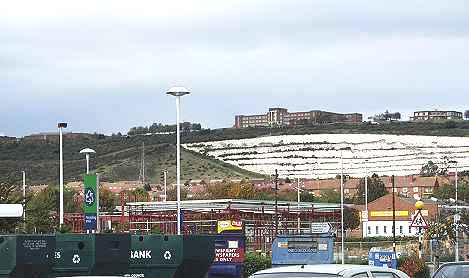
Portdown Main from Tescos carpark

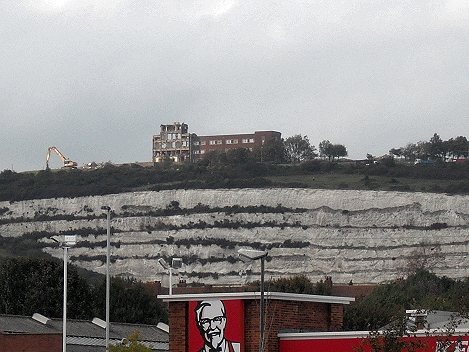
 On the right of centre skyline is Portsdown Main a prominent Portsmouth landmark as seen from Tesco's carpark at North Harbour. To the west Fort Southwick can be made out and below the building is Paulsgrove Chalkpit.


Portsdown Main from the road

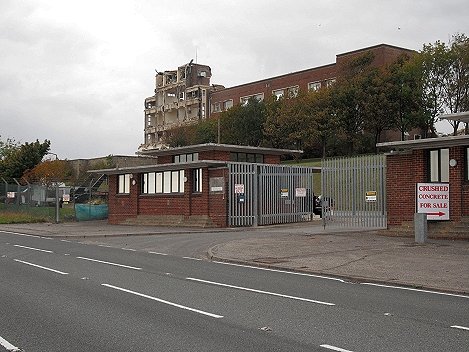
 Portsdown Main as seen from James Callaghan Drive looking west. The entrance is centre left between the two Guardhouses. The bus shelters were for the employees, and traffic to the site was so heavy that it had its own set of traffic lights.


Front of Portsdown Main   

 The building consists of three full floors, two levels of penthouses just visible top centre and a basement occupying a quarter of the building area at the western end.


Interior doors

 The external 'art deco' style continues inside. This is the main south entrance lobby.


Central staircase

 The central main staircase. The banisters are made of metal and used to be polished bright. A film crew used this location in the making of an Agatha Christie film. 


Corridor

 The layout of the floors is very uniform throughout the building with one corridor looking much like another. The floors are laid with Parquet tiles which are now beginning to lift due to the heating being off for so long.


click the arrow


page 1 of 2

>